Keeping a Narration Notebook (Free Printable)
Narration in a Charlotte Mason Homeschool
“Narrating is an art, like poetry-making or painting, because it is there, in every child’s mind, waiting to be discovered, and it is not the result of any process of disciplinary education.” - Charlotte Mason, Home Education
Narration is one of the greatest tools in a Charlotte Mason education. It is the means by which a child digests a story and makes it their own. To narrate means to “tell back” the story they have just heard or read in their own words.
Younger students narrate orally after the mother reads aloud. The mother can write down their narration in a narration notebook, word for word, to track their student’s progress. Older students can keep their own narration notebook either providing a handwritten or typed narration.
How We Keep a Narration Notebook
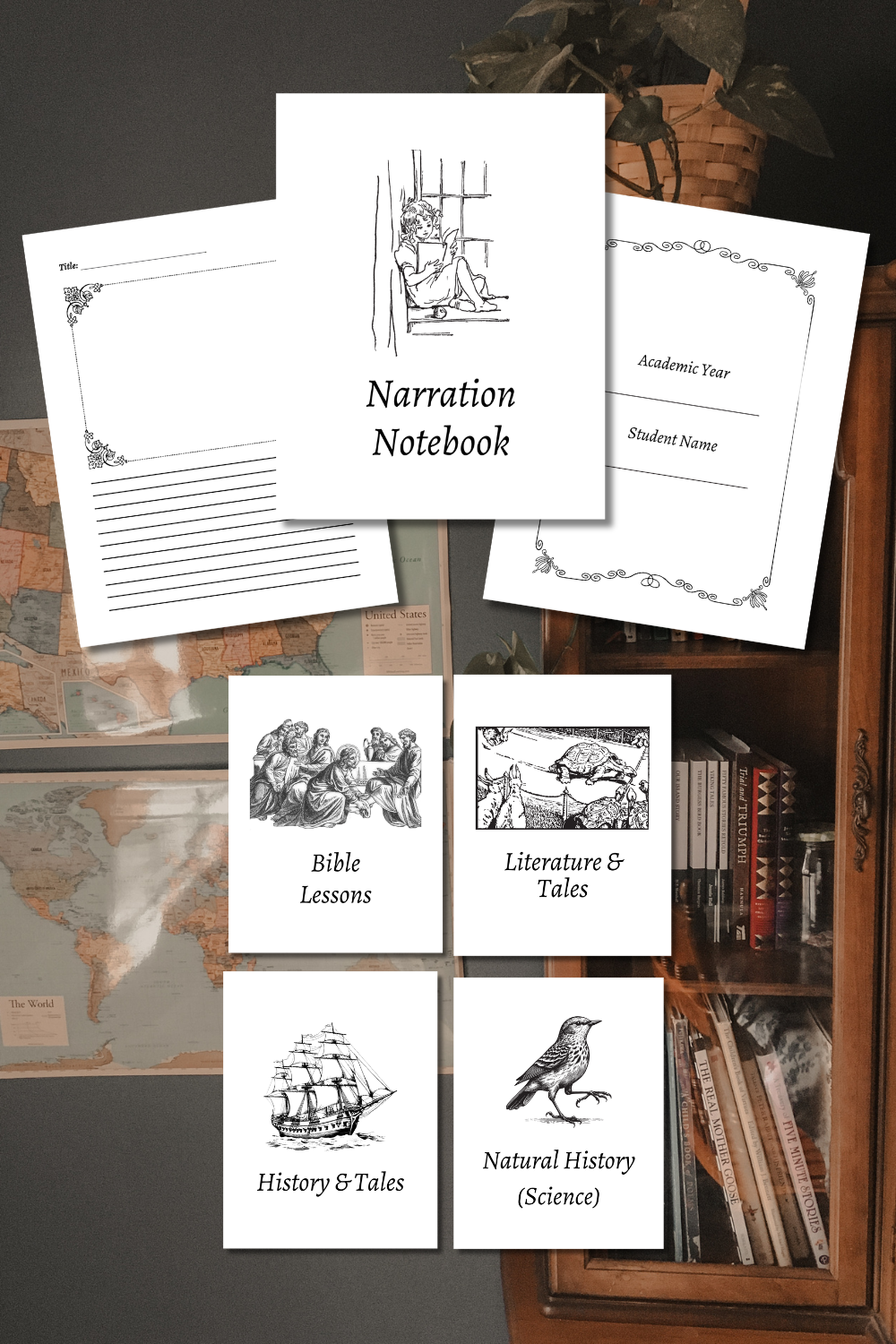
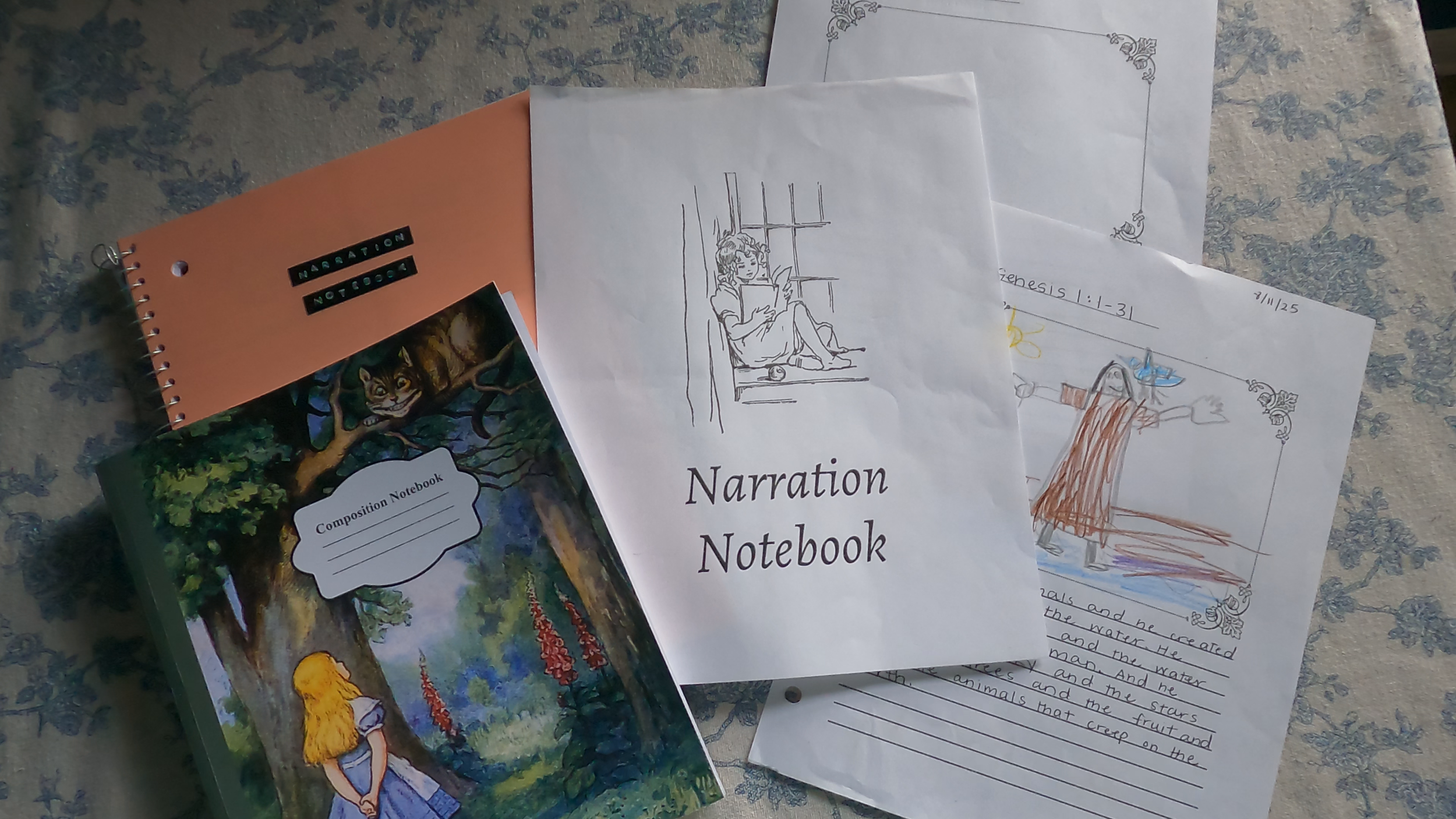
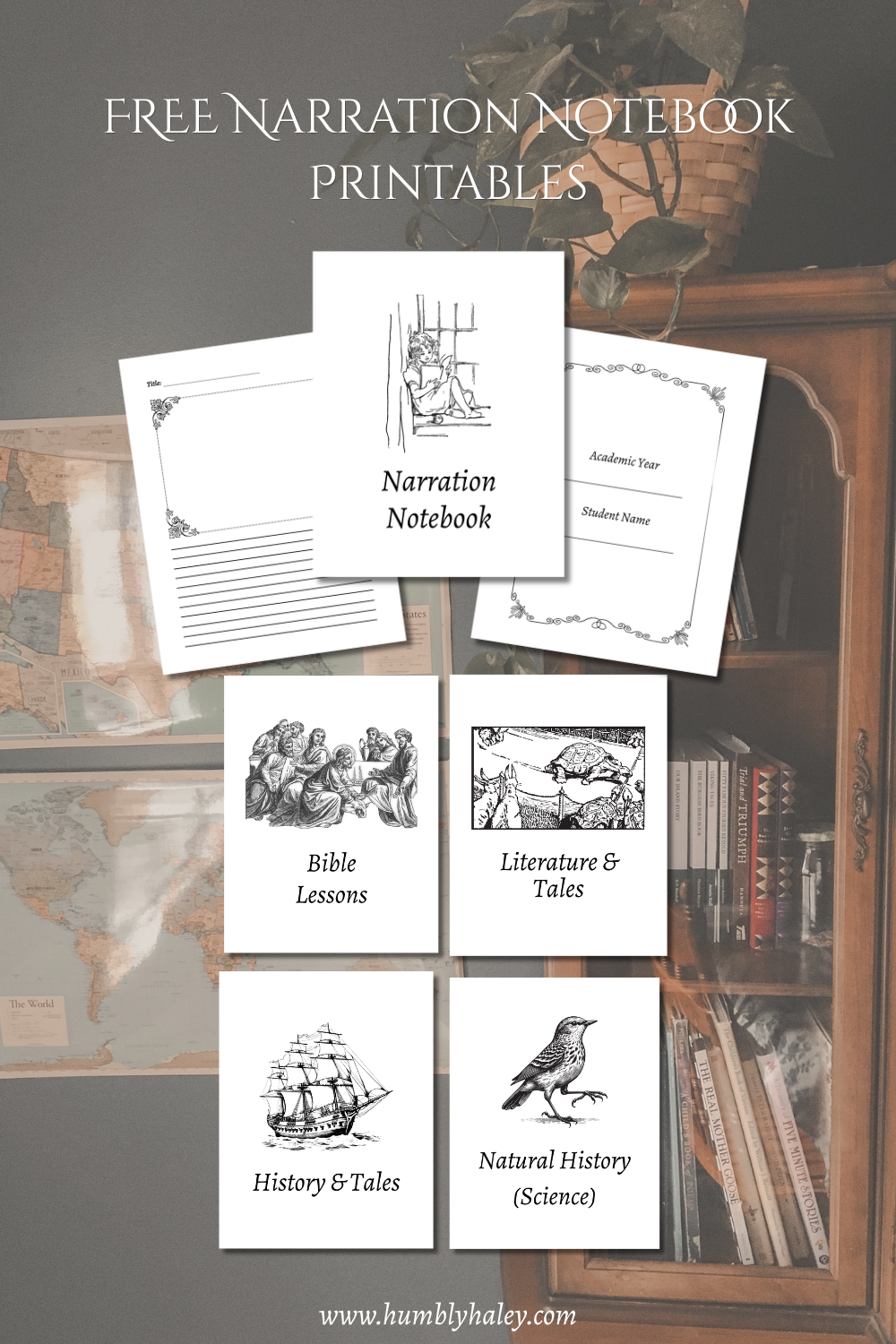
There are two ways we have gone about keeping a narration notebook in our Charlotte Mason homeschool. The first is by using this free printable for younger students who are just beginning to narrate. This printable is designed to work with a three-hole punch binder. There is a binder cover, dividers for each subject and a narration page that includes lines to record your child’s narration and a box for the child to draw a picture of the story they just narrated.
The box for a picture was helpful when I needed something independent my student could work on while I tended to my younger children. It is also another means of seeing how the child interprets the story.
When my student matured, we swapped to using a composition notebook for recording her narrations. In the front page, I created a subject key for each of our subjects (Bible, History, Natural History and Literature). I assigned each subject a specific highlighter color. When I begin to record a narration, I write the date and title of the story/chapter. I highlight the title with its corresponding color then record the narration underneath. Instead of starting a new page for each narration, I just skip a line to save paper. When a child begins to handwrite their own narration, they can use the same method.
How to Use Narration
After you have read aloud to your child, ask them to narrate or tell back the story. “Could you narrate the story?” or “Could you tell me the story of the Tortoise and the Hare?”
Write down word for word what your child says. Do not correct their words or errors in speech, even if it is a bit jumbled as they sort out their thoughts. By recording a true representation of their narration, you can see their progress. You can also see which subjects they excel in remembering and which ones may require further questioning. For example, my student’s literature narrations are almost exact while as their history narrations are no more than a few lines.
If a child leaves out a large portion of the story within their narration, you can further prompt them by saying “What else?” or “And then what happened?”
You may also ask specific questions such as “What was their name?” or “What country did they live in?” It’s okay if they don’t remember but you are questioning them to see if you can draw the information out of their memory. If not, simply remind them cheerfully.
If they are young and giving their narration orally as you record, don’t stress about your handwriting or punctuation as you try to keep up. Do your best and try to interrupt them as little as possible.
You do not need to pre-read any stories that you are reading aloud or that you are also listening to an audiobook for. But if you have an older student who is reading material on their own and recording their narrations on their own, you will need to pre-read the material in order to make sure that their narration is accurate or ask them further questions about their reading.
Free Narration Notebook Printable
To access the printable, simply click the download button below. The PDF will pop up in another tab, no email required!
Book Recommendations to help you with narration:
As a Charlotte Mason homeschooling mother, I believe in reading Miss Mason’s words for yourself. There is no one who relates her ideas so beautifully as she does. However, there are many modern CM homeschooling mothers who have written valuable resources to help the new generation of Charlotte Mason families. Here are my favorite book recommendations on narration below:
Home Education by Charlotte Mason
Towards A Philosophy of Education by Charlotte Mason
Know and Tell: The Art of Narration by Karen Glass
A Charlotte Mason Companion: Personal Reflections on the Gentle Art of Learning by Karen Andreola
DISCLAIMER I will receive a small percentage from books purchased through my Amazon affiliate links at no additional cost to you. Thank you for your support, friend!
Dear Reader,
I hope you found this helpful! Narration is an incredible learning tool and far less complicated than you may believe. One thing I love about a Charlotte Mason education is that it is just books and notebooks. Beautiful literature and creative and simple means of expressing what has been learned. Happy homeschooling!